Why Odoo is Better than Traditional ERP
Introduction
Selecting the right ERP solution is one of the most strategic decisions a business can make and understanding why Odoo is better than traditional ERP is central to that decision. For years, traditional ERP systems have been the default choice — powerful and feature-rich, but expensive, complex, and built primarily for large enterprises with the heavy budget and IT resources to match.
Odoo is changing that equation. As an open-source, modular ERP platform, Odoo gives businesses of all sizes access to a fully integrated system without the high license fees price, or the year-long implementation projects that traditional ERP demands. Odoo is exceptionally flexible allowing companies to start with the modules they currently need and expand the system gradually
In this blog, we break down exactly what makes Odoo a better choice as compared to traditional ERP systems.
What is Traditional ERP?
Traditional ERP systems are large, enterprise-grade software platforms designed to consolidate business processes — finance, inventory, HR, manufacturing, and procurement — into one system. They have long been the tool of choice for large corporations and are known for their depth of functionality.
However, these systems follow monolithic architecture and often come with high costs and complex implementations. As a result, for most growing businesses, the cost and complexity far outweigh the benefits.
What is Odoo ERP?
Odoo is an open-source ERP platform built on a modular architecture. Instead of a fixed, bundled suite, Odoo lets businesses choose the modules they need — CRM, Sales, Inventory, Accounting, Manufacturing, HR, eCommerce, and more — and add further modules as the business grows. Every module is built on the same platform, so data flows seamlessly between them without any custom integration work.
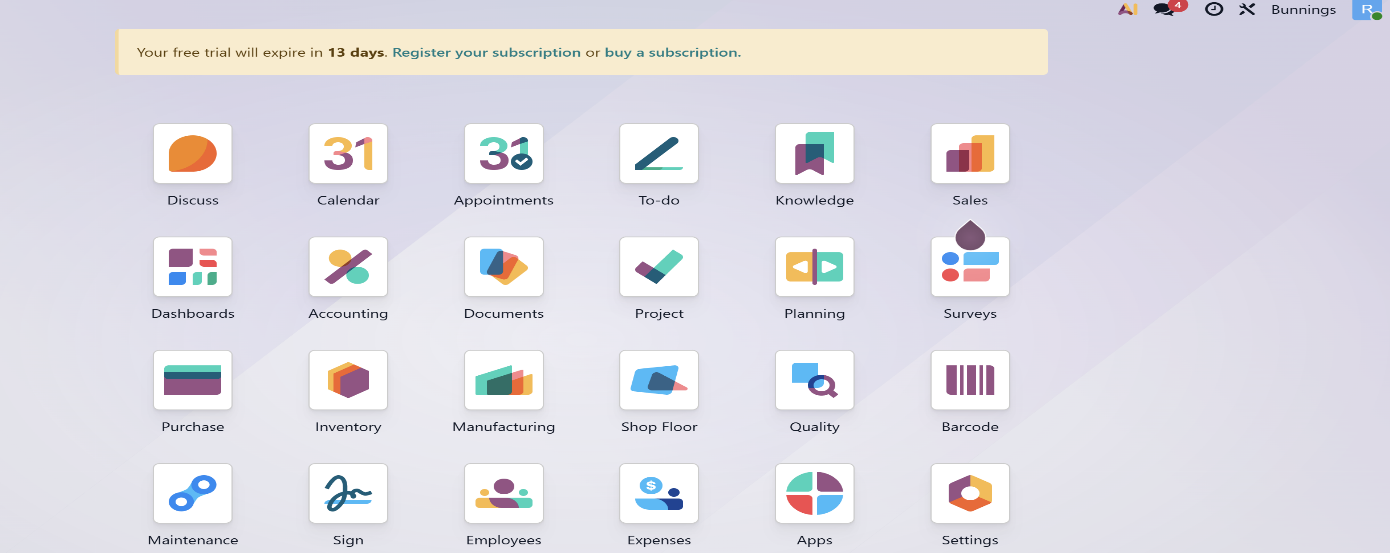
Available as both a cloud and on-premise solution, Odoo combines enterprise-grade functionality with a modern interface and pricing that works for businesses at every stage of growth.
Why Odoo is Better than Traditional ERP
Here is a look at the key areas where Odoo consistently outperforms traditional ERP:
1. Cost-Effectiveness
Cost is the most immediate difference. Many traditional ERP systems incur high licensing and maintenance costs making it a costly investment. In contrast, Odoo offers a significantly more cost-effective alternative that provides excellent price-performance ratio.
2. Modular Architecture
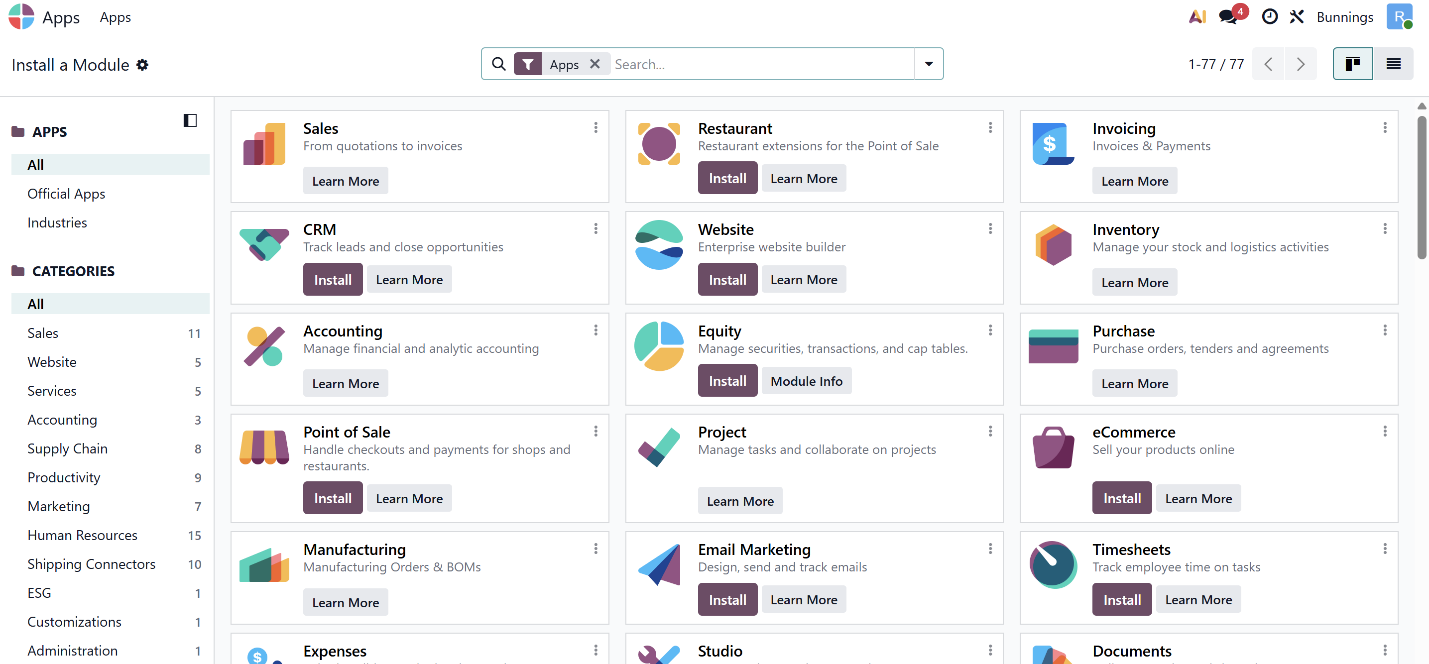
Traditional ERP is monolithic by design — you buy the entire suite whether you need all of it or not. Odoo is modular at its core. You start with the applications your business needs today and add more as you grow, without any system overhaul. A business can begin with Sales, Invoicing, and Inventory, and expand to Manufacturing, HR, and eCommerce when the time is right. This means you are never paying for complexity you have not yet reached, and scaling the system is a matter of activating new modules rather than managing a separate project.
3. Faster Implementation
Traditional ERP implementations are notorious for running over time and over budget — projects planned for twelve months regularly stretch to eighteen or more. Odoo implementations are significantly faster because the system is highly configurable out of the box, the phased approach allows businesses to go live with core modules quickly, and certified Odoo partners bring proven deployment methodologies specific to the platform. Consequently, most businesses go live in weeks to a few months, not years, which means a faster return on investment and value from day one.
4. User-Friendly Interface
A significant problem with traditional ERP is its complexity. Users need to undergo extensive training before they can navigate the system efficiently, and even then, many fall back on spreadsheets for day-to-day work. Odoo has a clean, modern, and consistent interface across every module. The navigation logic is the same whether you are in CRM, Inventory, or Accounting, which means onboarding staff into a new area of the system is fast. Most users are productive within days, not weeks. This reduces training costs, improves adoption, and ensures the business gets the value it invested in.
5. Customization Without Vendor Dependency
Traditional ERP is rigid. Every customisation — a new field, a workflow change, a custom report — requires vendor involvement, a change request, development time, and a fee. For businesses with specific processes, the customisation bill alone can exceed the original licensing cost. Odoo is designed to be configured, not customised. Most adjustments are handled through Odoo’s built-in tools by a certified implementation partner during the project. When genuine development is needed, Odoo’s open-source architecture means the code belongs to your business, not the vendor.
6. Open-Source Advantage
Odoo’s open-source nature gives it a fundamental edge over closed-source traditional ERP. In a traditional system, the vendor owns the source code and controls what you can and cannot do. With Odoo, the source code is open. Therefore, Your certified partner can read it, modify it, and build on it. Any customization belongs to you. If you change partners, the work comes with you. The global Odoo developer community also constantly contributes new modules, integrations, and improvements — ensuring the platform evolves continuously rather than waiting on a single vendor’s roadmap.
7. Easy Integration with Other Tools
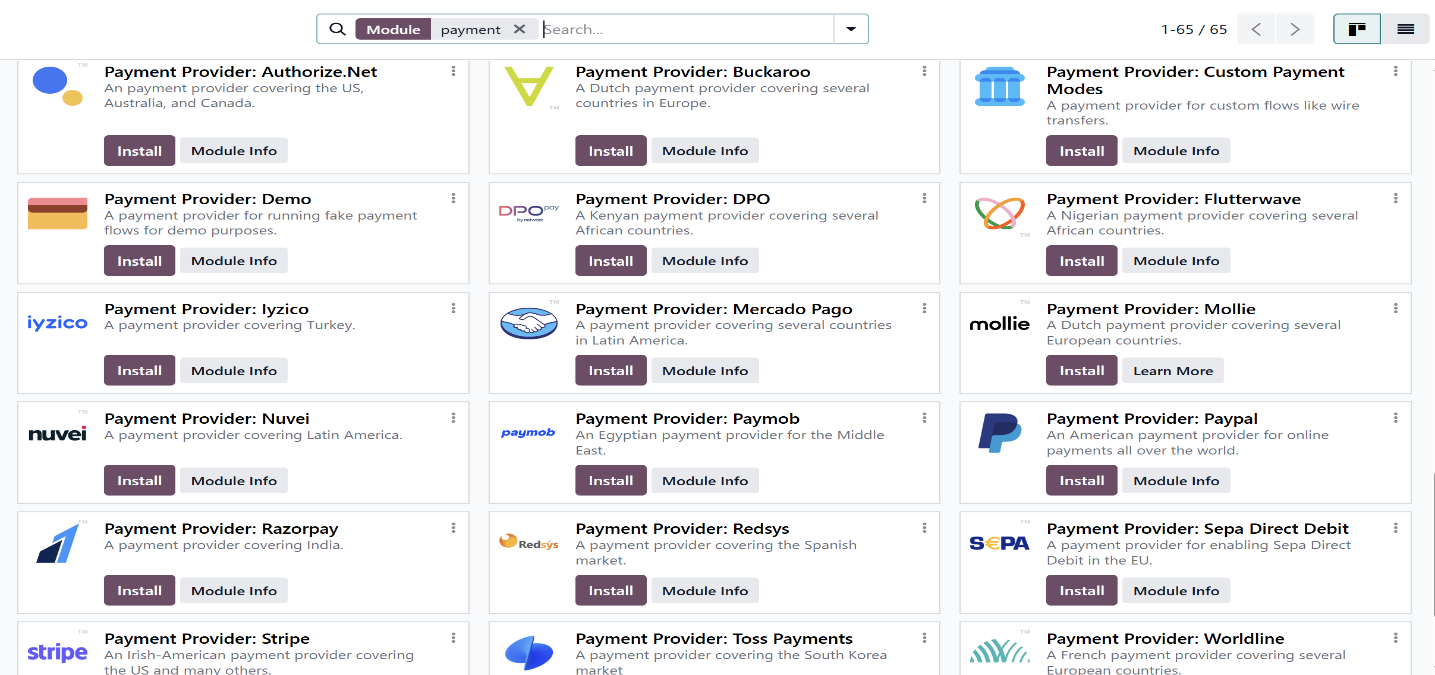
Traditional ERP systems have a closed-source architecture that makes integration with other tools difficult and expensive. Odoo takes a different approach with extensive APIs and a flexible architecture that enables easy integration with a wide range of third-party applications — payment gateways, logistics platforms, eCommerce tools, communication apps, and more. A large library of pre-built integrations is also available within Odoo through the Apps Module.
8. Industry-Specific Modules
Traditional ERP often requires expensive modifications to meet industry-specific requirements. Odoo has a rich ecosystem of industry-specific modules covering manufacturing, real estate, retail, healthcare, education, hospitality, logistics, and more. A certified partner can deploy these modules with minimal customization. Whether you run a trading company, a manufacturing plant, a service firm, or a retail business, Odoo has modules built for your specific workflows.
9. Regular Updates Without Disruption
In traditional ERP, major upgrades are expensive projects that many businesses delay for years because the disruption and cost are not justified. As a result, businesses fall further behind the current version and miss new features. Odoo releases a new major version every year with regular updates in between. For cloud deployments, Odoo manages updates automatically.. For on-premise deployments, a certified Odoo partner handles the upgrade as part of the ongoing relationship.
10. Active Community and Certified Partner Support
Traditional ERP support is entirely vendor-dependent — raise a ticket and wait. Odoo benefits from a global community of over 100,000 developers and consultants who continuously contribute to the platform. For professional support, the certified Odoo partner network provides implementation, customisation, training, and ongoing assistance tailored to each business. As an Official Odoo Partner in India, Infintor Solutions brings deep platform expertise and industry experience to every engagement.
Odoo vs Traditional ERP: Feature Comparison
Here is a direct comparison across the features that determine the real value of an ERP investment:
| Feature | Odoo | Traditional ERP |
| Cost | Affordable, per-user pricing, free Community edition | High licensing, maintenance, and implementation fees |
| Architecture | Modular — install only what you need | Monolithic — bundled suite, pay for everything |
| Deployment | Cloud or On-Premise | Primarily On-Premise |
| Implementation | Weeks to a few months | 12 to 36 months on average |
| Customization | Highly configurable, open-source | Limited, expensive, vendor-dependent |
| Ease of Use | Intuitive UI, minimal training needed | Complex UI, extensive training required |
| Integration | Extensive APIs and third-party add-ons | Difficult and expensive |
| Upgrades | Regular updates included | Infrequent, costly, and disruptive |
| Source Code | Open-source — you own the code | Closed-source — vendor controls everything |
| ROI | High — fast deployment, low cost | Moderate — high cost, slow deployment |
| Best For | SMEs and growing enterprises | Large enterprises with legacy complexity |
Who Should Consider Switching to Odoo?
Odoo is the right choice for a wide range of businesses that traditional ERP has consistently underserved:
- Growing SMEs that need proper ERP functionality but find traditional systems too expensive or complex
- Businesses on traditional ERP paying high maintenance costs for a system that still requires spreadsheet workarounds
- Companies on multiple disconnected tools that want one integrated platform without a multi-year project
- Businesses that need to move fast— new market entry, rapid scaling, or post-acquisition integration
- Organisations that want to own their system rather than remain permanently dependent on a vendor
Odoo offers everything a modern business needs from an ERP platform — a full suite of integrated applications, a clean and modern interface, open-source flexibility, and a pricing model that works at every stage of growth — without the cost, the complexity, or the vendor lock-in of traditional systems.
In summary, whether you are evaluating ERP for the first time or looking to move away from a system that has outgrown its usefulness, the case for Odoo is clear.
FAQ’s
1. Is Odoo suitable for large enterprises or only SMEs?
Odoo scales from small businesses to large enterprises. It supports multi-company, multi-currency, and multi-warehouse operations and is used by businesses with thousands of users globally. The key difference is that Odoo is also genuinely accessible and affordable for smaller businesses — something traditional enterprise ERP rarely achieves.
2. What is the difference between Odoo Community and Odoo Enterprise?
Odoo Community is the free, open-source version with core modules at no cost. Odoo Enterprise adds advanced features, additional modules, Odoo’s cloud hosting, official support, and regular update management. For most businesses looking at a complete ERP platform, Enterprise is the recommended choice.
3. Do we need a partner to implement Odoo?
For most businesses, working with a certified Odoo partner is strongly recommended. A good partner ensures the system is configured correctly from the start, your data is migrated cleanly, your team is trained properly, and you have ongoing support as the business evolves. Getting the foundation right with an experienced partner saves significant time and cost in the long run.
4. What happens to our data when migrating from traditional ERP to Odoo?
Odoo supports data import through CSV, Excel, and its API, and established migration processes exist for bringing data from most common business systems into Odoo cleanly and accurately.
As an Official Odoo Partner in India, Infintor Solutions has helped businesses across manufacturing, trading, retail, and services implement Odoo and leave legacy systems behind. We handle the full journey — from discovery and configuration to go-live and ongoing support.
Connect with us at infintor.com for expert support and guidance.